Topics
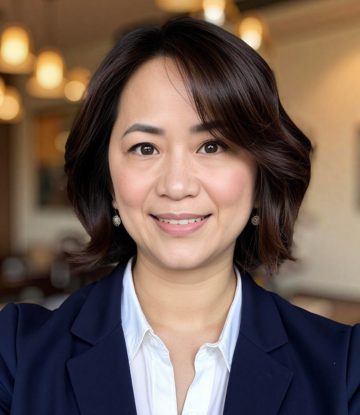
Executive Spotlight: Arah Tan, SVP Supply Chain & Logistics at OTG
Supply Chain Scene: Tell us your story — your career and how you got to where you are now.
Arah Tan: I didn't start in supply chain. I started on the floor in operations, literally running restaurants and commissaries at airports when I was with HMS Host. I was managing teams, opening new units, dealing with the chaos of live operations every single day. And I think that's actually the thing that shaped everything for me. I knew what it felt like to be the person waiting on a delivery that didn't show up. I knew what it meant when the supply chain failed the operator.
I came to the US from the Philippines, built my career from the ground up, and spent 20 years at HMS Host, growing into supply chain leadership. That journey wasn't handed to me. There were rooms I had to earn my way into and honestly, some rooms where people didn't expect someone who looked like me to lead the conversation.
Being a working mom through a lot of this has also shaped me in ways I didn't fully appreciate until later. When you're trying to close a major supplier negotiation and also make it to your son's school play, you get really, really good at prioritizing what matters and letting go of what doesn't. That clarity makes you a better leader.
The moments that shaped me most weren't the big wins. They were the moments I had to figure something out with no roadmap, no budget, and a team counting on me. That's where character gets built.
SCS: You've spent more than 20 years watching this industry evolve. What's changed the most, and what stands out as a defining shift?
AT: The field has changed so much, and I've been lucky enough to watch it from almost every angle. When I started, supply chain in foodservice was very much a behind-the-scenes function. You bought the stuff, you moved the stuff, you hoped it showed up. It wasn't glamorous, and it wasn't strategic — or at least people didn't treat it that way yet.
What shifted is that supply chain is now undeniably a business-critical function. The pandemic made sure of that. Overnight, every executive who had never thought twice about fill rates or contract spend was suddenly very interested. And honestly, for those of us who had been quietly building resilient supply chains for years, it was a moment of okay, now everyone sees what we've been doing.
The lesson that stands out to me: relationships over transactions, every single time. The suppliers who picked up my calls during COVID, who worked with us through shortages and price spikes, those were relationships built over years of mutual respect. You can't manufacture that in a crisis.
I'll also say this: being a woman of color in this industry, I've always had to be more thoughtful about how I build trust and credibility in rooms where I'm often the only one who looks like me. And that actually made me better at the relationship piece. I had to lead with empathy and authenticity, because that was genuinely the only currency I had in some of those early conversations. And it turns out that's exactly what the best supplier relationships are built on.
SCS: Reflecting on your career, how do you manage uncertainty? COVID was great training, but the disruptions we're experiencing now seem to be happening faster than ever. How do you plan for the un-plannable, and how do you respond when supply shocks hit?
AT: Honestly, a lot of deep breaths — and then a plan.
I think what people underestimate about uncertainty is the emotional weight of it. Especially when you're a leader and your team is looking at you wondering if everything is going to be OK. You have to hold that while also solving the actual problem. That's not a skill they teach in business school.
As a mom, I've been managing controlled chaos for a long time. You learn to stay calm on the outside when you're problem-solving at 100 miles an hour on the inside. I carry that into every supply disruption. The team needs to see steadiness, even when the situation isn't steady.
Practically, what worked was doing the un-glamorous work before the crisis hit. Tightening contract coverage, diversifying the supplier base, cleaning up inventory, and identifying backups. We went from barely half of our spend under contract to nearly all of it. That discipline is what created stability when the market got unpredictable. We built it intentionally, knowing that when conditions turned volatile, we’d need a foundation to operate from.
And communication. Just honest, clear communication with your suppliers, your operators, your leadership. No one benefits from sugarcoating a supply problem. The faster you name it and move toward solving it, the better the outcome.
SCS: Artificial intelligence — I know this topic comes up a lot, but there have been radical shifts in just the last year in how people are thinking about it. Without asking you to reveal anything proprietary, tell me how you see AI positively impacting your work and operations, and what you see for it in the future.
AT: It's genuinely exciting and at the same time, kind of fearful, at least for some and rightfully so.
Why do I say genuinely exciting? I say that as someone who has watched this field evolve from fax orders and a number 2 pencil and a paper order guide in a binder, to ERP systems and AI-powered forecasting. Even in team meetings AI takes the notes and sends them to suppliers. That used to take real time. Now it just happens.
The biggest shift I see is the move from reactive to predictive. For so long, supply chain was about responding. A supplier misses a fill rate, you scramble. A commodity spikes, you react. What technology, and AI specifically is enabling now is the ability to see around corners. To anticipate disruptions, model price volatility, flag supplier risk before it becomes an operational problem. That is a total game changer for our industry.
But here's what I really believe, and this comes from my years of experience doing this work: technology amplifies the human. It doesn't replace the human. The data can tell you what's happening, but it takes someone who understands the business, the culture, the people to decide what to do about it.
And I think it's especially important for underrepresented leaders to hear this — the rise of AI isn't a threat. It's an invitation to bring our full humanity to the work. The empathy, the judgment, the relationship intelligence, the lived experience — all of that matters more, not less, as the technical pieces get automated.
I'm not intimidated by technology. Even at my age — I'm a Gen Xer. I'm energized by it, because it frees me up to focus on the parts of the work I love most: strategy, the people, and problem solving.
SCS: What skills and traits are crucial for success in supply chain management, and what advice do you have for young professionals who want to stand out?
AT: The technical skills matter. Learn your commodities, your contracts, your data. I tell my team: be curious about the numbers. But the thing that will actually set you apart is learning how to build relationships and how to communicate. Those two things are the difference between a good supply chain person and a great supply chain leader.
And here's what I'm seeing as AI takes over more of the analytical work: the human side matters more, not less. What I'm still looking for when I hire is someone who can sit across the table from a supplier and build real trust. That hasn't been replaced, and I don't think it will be anytime soon.
For young professionals, especially young women and people of color who might feel like they have to work twice as hard to be seen, I want to say this directly: you belong in this room. Don't shrink. Ask the question. Raise your hand for the hard project. Let people see you solve problems. Being a working mom taught me to stop waiting for the perfect moment to speak up or take the leap. There's no perfect moment. You figure it out as you go, and you get better every time.
On mentorship, I feel strongly about this. I am where I am because people believed in me and invested their time in me. I don't take that lightly. I actively mentor people, especially women and minorities entering this field because I know how much a single conversation, a single connection, a simple "I see you and I think you've got something" can change a trajectory. Find people who will be honest with you, not just cheerleaders. People who will tell you where your blind spots are. And when your time comes, pour that into someone else. That's how we move this whole industry forward together.
SCS: You attend both the Spring and Fall Supply Chain Expert Exchange conferences. Why do you come, and what do you get out of it?
AT: The one thing I look forward to most is that this is the one conference where I walk in and everyone is doing the same work I'm doing. We're all in the same field, dealing with the same challenges. At other conferences — events with chefs or restaurant operators — the conversations don't land the same way. Here, you can go deep immediately. Best practices, honest conversations, real peer exchange.
I'll also say this: I may be in the position I'm in today partly because of the exposure and the connections I've built within this (Supply Chain Expert Exchange) group. That's not a small thing.
And the roundtables are what I always look forward to most. Whether we're talking about AI, contracts, or supplier relationships, you're hearing directly from peers who are living the same reality you are. That kind of knowledge doesn't come from a conference session. It comes from sitting across from someone who gets it.