Topics
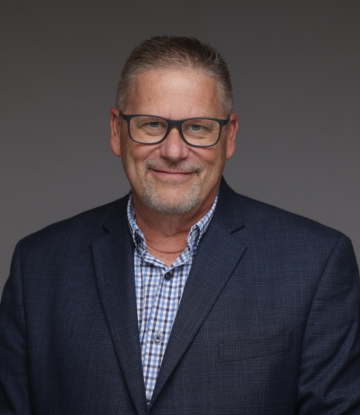
Executive Spotlight: Tom Hannon, President, Sky Co-Op
Supply Chain Scene: Let's start with how you got to where you are now.
Thomas Hannon: I started early in life in the restaurant business. My dad had restaurants, and I started working in them at age 13. My first job, in the summer, was cleaning produce. Back when everything was done in house, we'd peel 50-pound bags of onions and potatoes. I worked all the way through high school doing that kind of thing.
When I decided to go to college, I told myself I wasn't going to get into the restaurant business. I went into retail instead, working for a large department store, McAlpin's, which later became Macy's. I was on the operations side, on the back end, working the dock. I was drawn to the structure of it, the operations, the HR piece, the facilities side, more than marketing.
I graduated from the University of Cincinnati. There was one superintendent-trainee position across all the stores, and it just so happened they didn't have one open. So I actually started out in manufacturing instead, with Durkee-French Foods. If you know Frank's Hot Sauce, that's them. That's where Frank's was created. I came up through the operations side: production scheduler, labor relations manager, plant superintendent, all of it. I was on the fast track. The next step was running a plant. They even wanted me to move down and run all the pepper operations, but I elected not to.
I was in charge of commercial foods within that business. Eventually, as labor relations manager at a union facility, I was the one who had to close the plant and lay off all the employees, a process that played out over about six months. After that, I decided I didn't want any part of HR anymore.
In 1993, I went to work for Skyline Chili, based in Cincinnati and around since 1949. We had a manufacturing facility where all the chili was made, plus distribution. We were delivering to the restaurants, and we franchised all of those pieces. I stayed on the operations side, working in the plant and learning everything from quality to the grinding of the meat to production. I did that from 1993 to 2006.
We were a franchise organization: the franchisor, the distributor, and the manufacturer of the key components. Operators were also buying approved-spec products from other companies, cheese, spaghetti, things like that, to specs we'd approved. At some point the question came up. If the large groups can run a purchasing co-op, why can't we?
So in 2006 I left Skyline corporate, though my office was still there. I rented from them, and we created the co-op. It didn't go smoothly. Several franchisees elected not to join, and it took three years to the date before all 130-plus locations finally came in. Along the way we changed the name from Skyline Chili Purchasing Cooperative to Sky Co-op, because the goal was bigger than Skyline. If we could do this for Skyline, what could we do for other independents out there? We moved our office out of Skyline corporate in September of 2009, and by October of 2009, all the Skyline Chili locations had joined.
Our first non-Skyline operator came through Graeter's Ice Cream. We were at a meeting. Somebody had a Skyline Chili shirt on, I had a Sky Co-op shirt, and they asked what the difference was. We got to talking with their person in charge of retail, and they became essentially the first non-Skyline operator to join the co-op.
Where we are now: we've evolved to over 350 locations in the co-op, moving roughly $14 million a month through four major broadline distributors. We keep adding groups, and at this point it's mostly inbound. Groups call us asking about the co-op. We're not actively soliciting right now. I wanted to get the right things in place first, the software and so on. That's how we got here, and how we keep growing.
SCS: You've been in the business long enough to watch supply chain evolve from purchasing into a critical function with a real seat at the executive table. Across all of that, what stands out? Any lessons learned or observations over the years?
TH: If I look at it from the beginning, the number one thing has been technology, and specifically the speed it's given us. We can know exactly what's happening, right now. Early in my career, you'd receive the PO, get the reports the next day, the sales would go in, and then you'd find out what you had. There was always that delay. You'd sit there looking through those huge green-bar reports.
Today, the data is immediate, and that matters because of everything happening at once. Traffic is down, costs are increasing. The question becomes: how do you concentrate on the largest impact you can make to the bottom line? In supply chain you're managing multiple pieces at once, quality, price, delivery, and anything you do to drive down cost goes straight to the bottom line.
So I'm always trying to identify where the real impact is. You'll find the one-offs, like switching register paper, and okay, that saves something. But where are the ones that are fast and hit the actual pain point? What I use now is an average case price for everything, broken out by concept, to identify the true impact. If I know today's average case price, and I can see what a 20% increase in can liners or a 16% increase in containers does to it, I know immediately what that means in real dollars, monthly and annualized, and what it does to a per-case price down to the penny.
The example I give people: if an operator is doing a million dollars in sales and putting 5% on the bottom line, and a change costs them a certain amount, you can show them exactly what percentage of that profit just disappeared. That's the kind of thing the technology lets you see now.
The bigger shift is going from reactive to forward-looking. People look at financials and ask, "What happened?" I'm trying to identify what's going to happen going forward. If I can tie in the forecast for a commodity, I can see what that's going to do to the average case price before it hits. It's the same with menu pricing. Prices go up, people start asking whether they should raise menu prices, but a lot of folks don't realize that at the end of the day customers remember the highs and forget the lows. So I'd rather know not just what's happening today, but the potential of what's coming next.
Long story short, it's how quickly you can make an impact. Before, you could still make an impact, it just took longer. Now the data is all there. The real question is what you do with it, because there's so much of it.
SCS: That leads into a question on technology. You're clearly embracing the latest tools. Where do you think this is all going for supply chain management compared to the past?
TH: I think the big shift is going from having to get the information to being given the information. In the past, you depended on an individual to go find it, look through it, do all the analysis, and then come back and run the questions. What's going to happen now is the information comes to us, so we can react even faster.
It'll get to the point where you can say, "Go run an RFP on gloves," and it just does it. It pulls the emails, pulls all of it, and you may have the whole thing back in an hour. Depending on how the manufacturers tie in and how all of this connects, the data is going to be there. The question becomes how quickly we can react.
If you look at FSMA 204 and some of those requirements, we're going to be required to have records available within 24 hours. We'll be able to produce things even faster than that, just because of what the technology is doing.
SCS: What does this mean for the human component? Supply chain is so relationship driven. How does that square with all the technology?
TH: I think the information will come through faster, but ultimately it's still a relationship business. You're working with your colleagues, working with everybody, and that doesn't change. You're still going to have the moment where an order didn't come in, something didn't happen, and you call someone and say, "Do me a favor, can you see if you can get this pushed up? Because I don't see any other way this happens." It takes somebody calling somebody else, or sending an email saying, "We need help on this, what can you do?"
That's an emotional situation, and I don't know how technology ever has that. We've all interacted with people where you think, "I just don't see how they get anything done," based on personality alone. But at the end of the day, it's a relationship business. The way I work with manufacturers and operators, I treat them like friends. In the Skyline organization, I've known these people for 33 years. I've worked with three generations. For me it's all relationship. I enjoy what I do and I enjoy working with the people.
Here's where technology doesn't do it: I'm transparent. I'll tell you whether I can or can't do something, whether I'm going to do this or that. If you've got a customer who's unhappy and there's something we can do for them, that goes a long way. I think that gets lost.
When you've been doing this a while, you'll ask somebody, "Did you call him?" "No, I sent him an email." "Did you call?" "No, they haven't responded to my email yet." Just pick up the phone and talk to them. There's not the same emotion in texting and emailing. There is some, but it's not the same as telling somebody the situation you're in and seeing what they can do for you. I don't know that technology will ever get there. That's the component where you'll always need the human.
SCS: Beyond practical experience, what skills do you believe are crucial for success in supply chain management? What advice would you give someone early in their career looking to grow?
TH: Here's what I've learned, and I'm a firm believer in this. We all go out and inspect manufacturers and take those plant tours. What I look for, and what helped me, is having actually worked in those facilities. I know what it's like because I've done those jobs. If you're going to go out and evaluate manufacturers, it helps to have spent time in a plant yourself. You know what it's like to work in a USDA facility, standing in 38 degrees all day. That kind of experience matters.
Second, take extension courses. Early in my career I took a couple of extension beef classes at Texas A&M, learning how cattle are processed and what it actually takes. When you break down a side of beef, there's work to it, and there's cost. One wrong slice on a tenderloin, and the difference between a tenderloin and ground beef is a big number. It's all dollars. So get the hands-on experience. Work in some kind of facility, or at least get out into the plant and be around it.
I have an economics background, but early on I went and took additional biology and chemistry classes to understand things like the water-binding capacity of ground beef as it cooks. I'd worked the line, I'd made the chili, I'd done those jobs, so I wanted to understand the science behind what I was already doing.
Later in my career I had the luxury of seeing all of it. We ran a distribution business and we had a manufacturing facility, so I could move between distribution and manufacturing. And because I dealt with franchisees directly as well as company units, I could see the inside of both. That perspective is valuable.
So it comes down to experience and training. If somebody offers you something, take them up on it. Knowledge is key. The more knowledge you get, the better you are. I was in a plant just last week, and because I've been in it, I can stand at a window and understand the equipment, what's happening, what the differences are. The equipment isn't what it used to be. It used to be cams and mechanical parts, and now it's all computer controllers and technology. So you have to understand what's really happening now, and technology is driving a lot of that.
And one last thing: if you're not sure, ask the question. It's never a bad question. If you want to know something, ask. That's what I always say.
SCS: Last question. You've attended the Supply Chain Expert Exchange conference. Why do you go, and what do you get out of it?
TH: Two reasons. First, the knowledge. People on stage often say things I'm not aware of. The information is there for the taking, and all it costs me is my time. Anything I learn helps the members of the co-op.
Second, the networking. We're all dealing with the same things, and I'm a firm believer that if somebody's already solved something, I don't need to reinvent the wheel. Just ask. Somebody has probably gone through exactly what I'm working on and has a solution. If I can get there faster, it's a win for everybody.